Increasing Efficiency of Cargo Ships
- henrybai091
- Sep 28, 2021
- 2 min read
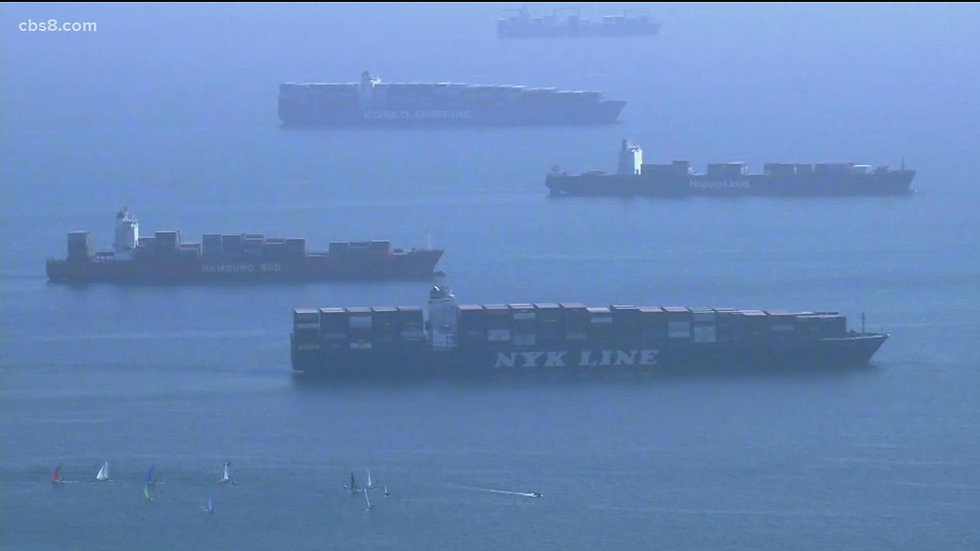
Source: CBS8
In last week's blog, I asked a question, which was, “are companies stuck with this huge hole in their sustainability goal?" Well, the answer is no, thanks to new innovations and techniques used to lower the emissions of container ships.
It’s common knowledge that to reduce the emissions of something, one of the first steps you can take is to make it more efficient, and that definitely applies to container ships. To make them more efficient, the design of the ship is front and center. The most efficient boats nowadays are larger and longer, they also trim out unnecessary parts of the structure and use light materials.
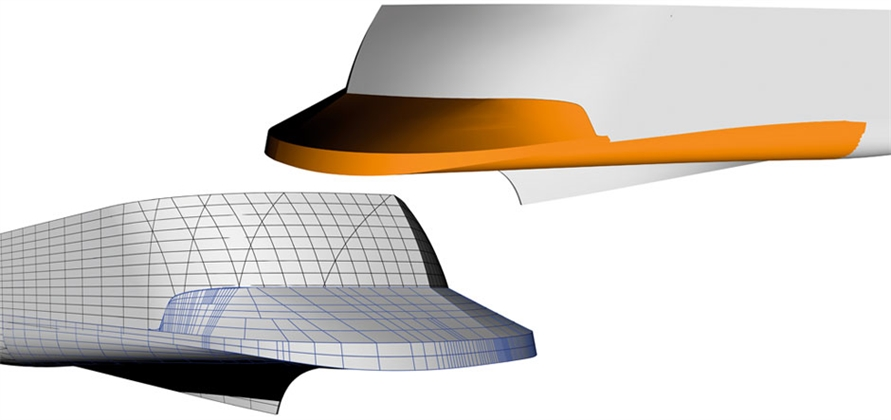
Do you know about the connection between ducks and massive ships? You might be thinking…. Their webbed feet may have influenced us human’s building of ships. But that’s not the connection I’m getting at. I’m talking about duck’s tails. Yes, ducks actually do have tails and they have not only helped ducks catch their meal, but they have also influenced humans to attach tails to their ships!
Source: Cruise and Ferry
The “duck tails” of ships is the lengthening of the aft of a ship, helping to reduce the resistance of the ship. If you look at many of the new cruise ships, there’s a noticeable ducktail at the end. But when looking at cargo ships, you rarely see one with a ducktail. Making sure that cargo ships have these “tails”, is essential to lowering emissions in the shipping industry.

The Ducktail on the Viking Star cruise ship. Photo by Jason Leppert.
New, efficient, boats are also levitating...well, sort of. Compressed air pumped through the bottom of the ship creates bubbles that coat the hull of the ship in a layer of bubbles. This helps smooth out the passage through the water.
These simple but easy technologies can reduce the emissions of cargo ships by 7-22%!



Comments